
Review · HISTORICAL TOURS
Dubai’s Favourite Food & Historic walking Tour
Dubai has more than skyscrapers. I love how this small-group walk pulls you into Old Dubai street life and how the abra ride turns the Creek into part of the lesson. The only drawback: at $350 for about 3 hours, you should show up hungry and ready to try the full run of tastings, not just a couple bites.
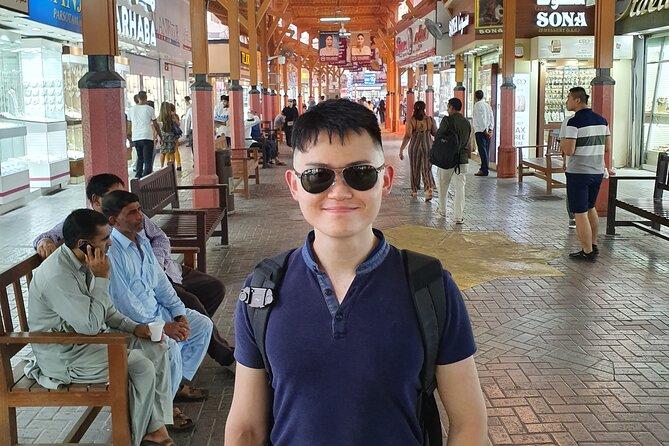
You meet at Al Ras Metro Station, and the plan stays simple: start in Deira, walk through the souks, cross the water, then finish back near where you started. I like that the tour is built around enough food to feel like a full dinner, with 12 tastings plus bottled water included.
The story part is not an afterthought. In the spice market, you get the angle of spices as medicine, tied to how Bedouins cooked long before modern healthcare, with lessons you can actually taste later on. I found that framing helps you understand why the flavors matter here, not just what you are eating.
In This Review
- Key highlights worth marking on your map
- Old Dubai food that actually explains the city
- Meeting at Al Ras Metro, then walking like locals do
- Deira starts the story with crepe and hummus
- Gold and spice souks, and why spices mattered before hospitals
- The abra ride across Dubai Creek: short, but it changes the day
- Bur Dubai tastings: shawarma, tabbouleh, mutable, camel meat
- Enough food for dinner, plus 12 tastings that add up
- Guide moments: the small group effect (Sandy and Malick)
- Price and logistics: is $350 worth a 3-hour walk?
- Weather, comfort, and what to do with your day
- FAQ
- FAQ
- Where does the Dubai Favourite Food and Historic walking Tour start?
- How long is the tour?
- How much does the tour cost?
- How many tastings and what kind of food are included?
- Does the tour include an abra ride?
- What neighborhoods are covered?
- What foods can I expect to try?
- What is the group size?
- Is bottled water included?
- What happens if the weather is bad?
- Do I need anything for booking?
- Should you book this Old Dubai food and history walk?
Key highlights worth marking on your map
- Al Ras start point: easy public transport meeting location before you head into the old quarters
- First tasting in Deira: Arabic crepe plus dips like hummus to get your bearings
- Gold and spice souks walk: you learn how souks formed and why they still matter
- Spices as medicine angle: a practical story that connects culture to what shows up in food
- Abra across Dubai Creek: short boat ride between sides, plus a shift in neighborhoods
- Bur Dubai food stops: shawarma, tabbouleh, mutable, camel meat, and more snack rounds
Old Dubai food that actually explains the city
This tour is built for people who want Dubai’s real texture, not just photos. The focus is “how the city started,” then “how people ate as it grew.” That matters, because it changes the whole way you taste what’s in front of you. Instead of treating food as a checklist, you get the reasons behind the habits: trade, fishing, spices, and the everyday routines that formed the souks.
You also get a classic Dubai moment that many itineraries rush past: the water crossing. The plan includes an abra ride across Dubai Creek, which is short, but it does something important. It helps you understand that Dubai is split by geography as much as by modern development. One side sets up the old market logic, the other side brings you into the fabric of smaller trade lanes and neighborhoods.
And yes, it is a food tour. The tastings add up to what the tour describes as enough to make a full meal. In practice, that means you are not paying premium prices just for one fancy bite. You should expect a sequence of small portions across multiple stops.
A few more Dubai outings to compare
- Dubai Evening Heritage Safari by Vintage G Class Al Marmoom Oasis
★ 5.0 · 1,500 reviews - Dubai: Abu Dhabi Grand Mosque, Palace, and Heritage Village
★ 4.8 · 1,265 reviews - Dubai Camel Desert Safari, Traditional Meal & Heritage Activities
★ 5.0 · 937 reviews
Meeting at Al Ras Metro, then walking like locals do
The tour starts at Al Ras Metro Station (Al Khor Street area, Deira, Al Ras, Dubai). That is a smart choice, because you are not stuck figuring out a private pick-up. If you are using public transit, you can get there without a car and without stress.
From there, the route moves step by step through the old parts of the city. The duration is about 3 hours, and the group size caps at 15 travelers. That small cap is part of the value. You do not get shuffled along behind a pace line while the guide talks to everyone at once. You can ask questions, and the guide can adjust the pace when you are tasting, not just walking.
The tour uses a mobile ticket, so you will want your phone charged. Bottled water is included, which helps on a walking day, especially around markets where you might want to keep moving.
Deira starts the story with crepe and hummus
Your first stretch is Deira, the area that best matches the tour’s origin story. You hear how Dubai started as a fishing and trading village and how that history shaped everyday food. Even if you have read a few lines about Dubai’s past before, this approach makes it more concrete because you are eating while the story builds.
The first tasting here is an Arabic crepe, followed by dips like hummus. This is a good opener. Crepe-style bread gives you a familiar base so you can notice how the dips and flavors shift. Hummus also acts like a flavor compass. Once you taste it early, later tastings make more sense as part of a broader palate, not random samples.
One practical note: these are not meant to be light “snacks you nibble.” The overall structure is designed so that the sequence totals enough for dinner. That means you should plan your day so you do not overeat beforehand. If you do, you will feel food fatigue, not “more culture per bite.”
Gold and spice souks, and why spices mattered before hospitals
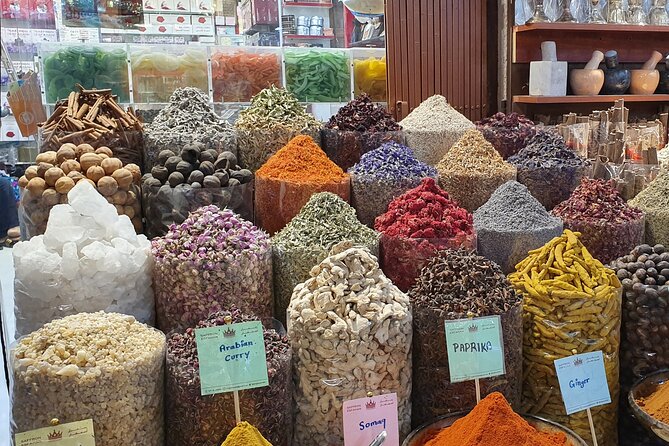
The walk through the gold and spice souks is more than shopping scenery. The tour explains how souks formed and why they remain relevant, including how the market idea still connects to today’s e-commerce world. That is a useful way to connect old trade systems to modern buying habits.
In the spice market, you get something specific and memorable: an overview of the medicinal aspects of spices. The guide ties it to Bedouins, noting that specialty hospitals were not available until much later, around the 1960s. You get the idea that spices were not only for flavor or preservation. They also played a role in how people approached wellbeing through cooking.
Even if you do not treat this as medical advice (and you should not), the story helps you taste with intention. You start to notice warmth, aroma, and how different spice profiles show up in foods you might otherwise lump together. It also gives you a framework for asking good questions if you buy spices later.
A small consideration: markets are active and can be sensory-heavy, with lots of smells and spices. If you are sensitive to strong aromas or have a sensitive stomach, take it slow at tastings and sip water between bites.
Another kind of day out in the Emirates:
- Dubai: Burj Khalifa Levels 124 & 125 Entry Ticket + Options
★ 4.3 · 90,891 reviews - Dubai: Desert Safari, Quad Bike, Camel Ride & Al Khayma Camp
★ 4.9 · 68,962 reviews - Dubai: Desert Safari, Quad Bike, Camel Ride and Sandboarding
★ 4.9 · 43,505 reviews - Dubai: Safari, Quad Bike, Camel Ride, and Buffet Dinner
★ 4.9 · 33,424 reviews
The abra ride across Dubai Creek: short, but it changes the day
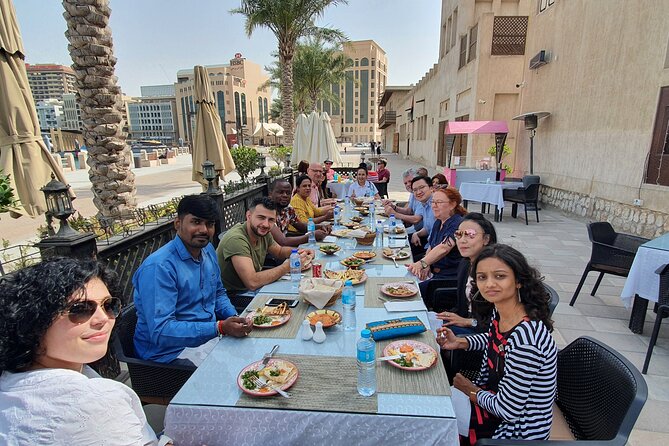
At some point, you cross via abra to Bur Dubai. This is one of the tour’s easiest “wow” moments because it is quick and real. You are not on a theme-park boat ride. It is a classic local crossing, and the environment feels like the city in motion.
Why I like this part so much for your experience: it breaks the walking rhythm. After market streets and spice talk, the water gives you a mental reset. You also get an immediate sense of contrast. The sides feel different in how streets tighten, how trade lanes look, and how neighborhoods present themselves.
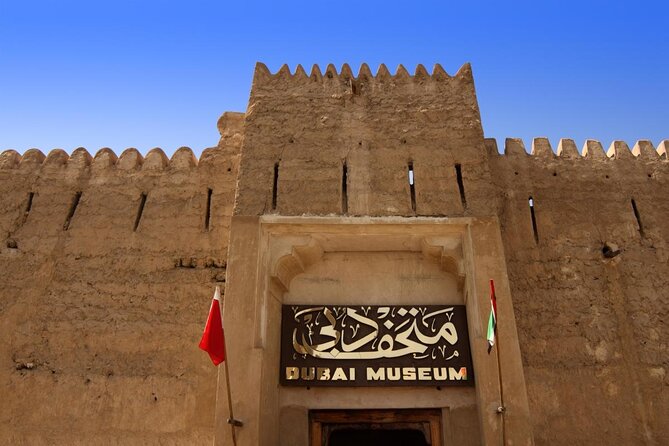
Once you arrive on the Bur Dubai side, the tour shifts into exploring “hidden places,” including textile souks and the Al Fahidi area. The point is not to pretend there is a secret staircase to fame. It is to steer you toward parts of old Dubai that many visitors skip when they only focus on the most famous sights.
Bur Dubai tastings: shawarma, tabbouleh, mutable, camel meat
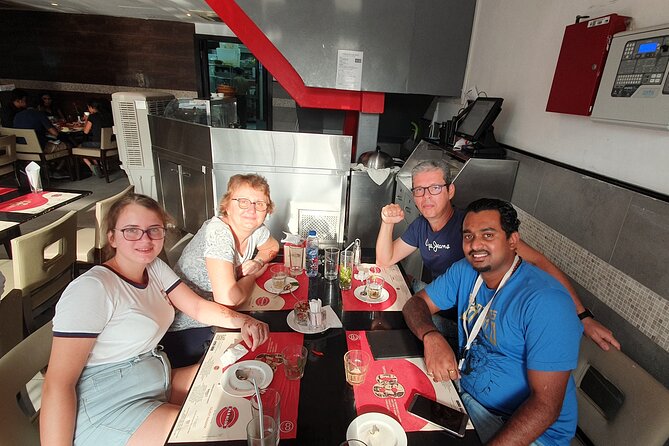
This is where the tour earns its price tag. After the creek crossing, you get more tasting rounds, including foods like shawarma, tabbouleh, mutable, and even camel meat. You should expect a mix of savory bites and meal-like samples, not just one dessert stop.
A few items stand out from the guide and guest feedback you can use to set expectations. Many people call out the chicken shawarma as a favorite, which tells me the tour is not only chasing novelty. The food is meant to be genuinely good. People also mention caramel milk ice cream, and another called out a camel burger. Those desserts and alternative-protein items make the tasting feel like a complete meal arc, not just street-food grazing.
How to approach these tastings so you get the most value:
- Pace yourself at each stop, because the total day is built around multiple rounds
- Ask the guide what to taste first if you are unsure (it can change how you perceive seasoning)
- If you have dietary restrictions, say so early at the start, because the plan includes specific items
One consideration here: camel meat and a camel burger are not for everyone. If you are hesitant about trying it, you still can enjoy the tour through the other tastings. But go in knowing at least one stop may include that option as part of the menu sequence.
Enough food for dinner, plus 12 tastings that add up
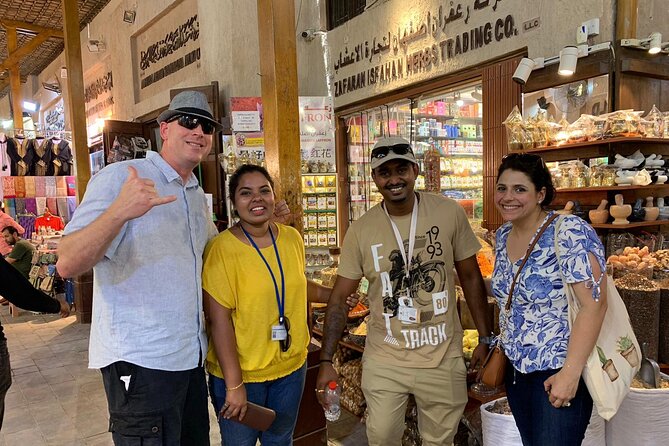
The tour describes dinner as included, with 12 different tastings of variable quantities, plus bottled water. That structure matters for how you evaluate the price.
At $350 per person, you are paying for:
- Multiple restaurant or café tastings across the old neighborhoods
- A guided walkthrough that connects each food stop to local history and market culture
- The abra ride across Dubai Creek
- Small-group attention, capped at 15
If you come expecting just a couple snacks, it will feel expensive. If you come ready to treat it like a planned meal and a walking orientation of the old city, it starts to make sense fast. Several people mention the food feels plentiful and that the guide keeps things engaging and proactive, with tastings that are actually satisfying.
I also like that the tour does not make you hunt for everything on your own. You get a sequence. You get enough bites to feel like dinner. You get water handled.
Guide moments: the small group effect (Sandy and Malick)
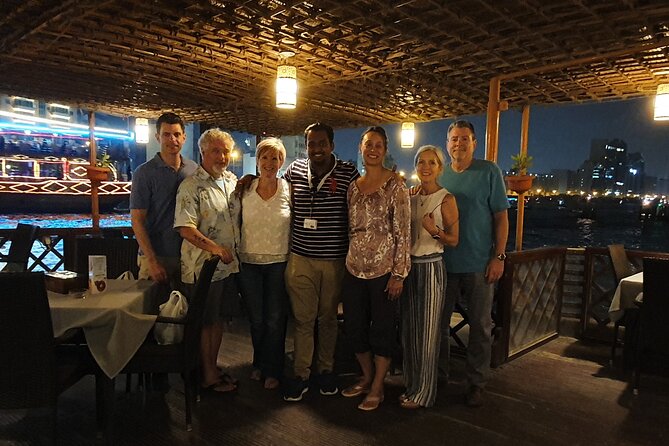
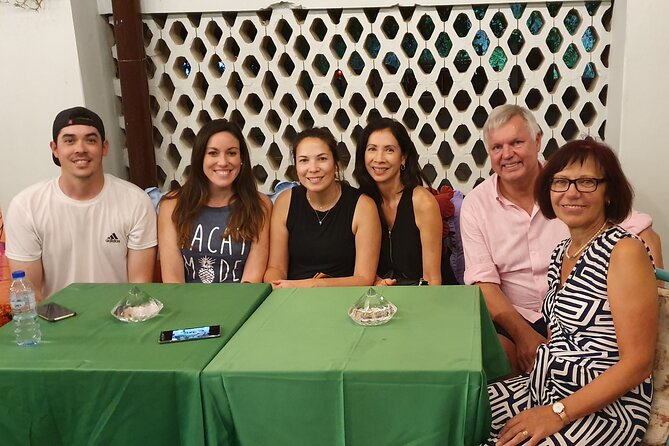
Small groups are where food tours get good or fall apart. Here, the cap of 15 people means you are more likely to have a real conversation with your guide. That is what many people highlight in their feedback: guides like Sandy and Malick were described as brilliant, engaging, and very informative.
I would treat that as a hint for how to make your own experience better. Ask questions. Not big vague questions, specific ones. Like:
- Why does this spice show up in this food?
- How did souks shape what people ate day to day?
- What does Dubai Creek mean for trade in this area?
When you ask those kinds of questions, the tour stops being just walking and eating, and it becomes a story you can repeat later. That is the best kind of souvenir.
Price and logistics: is $350 worth a 3-hour walk?
This tour is priced at $350 per person, for about 3 hours. That is not a cheap impulse buy. So here is how I would judge value before you book.
Worth it if you:
- Want Old Dubai, not just modern sights
- Like market culture and want context while you eat
- Eat fairly hearty, since the tastings are designed to add up to a full meal
- Prefer a small group so you get more attention from the guide
- Want a creek crossing as part of the experience, not as a separate activity
Maybe not worth it if you:
- Only want a light snack experience
- Hate walking in active market areas
- Are uncomfortable with at least some experimental items, like camel meat
Also, the tour is booked on average about 35 days in advance. That is a sign of demand, so if you have fixed dates, lock it earlier rather than later.
Weather, comfort, and what to do with your day
The tour requires good weather. If the day is poor weather, the operator will offer a different date or a full refund. That is important because markets and walking take longer when streets are slick or visibility drops.
Wear comfortable shoes. This is a walking day with market stops and repeated tasting locations. You will spend time on foot, so plan on dressing for warm conditions and bring layers if you are sensitive to indoor air-conditioning when you pop into cafés.
Also, because bottled water is included, you still want to drink between tastings. Markets can be warm, and spices can hit you differently if you are not pacing.
One more small tip: since it includes dinner-style food, adjust your meal plans for afterward. You likely will not want a heavy second dinner.
FAQ
FAQ
Where does the Dubai Favourite Food and Historic walking Tour start?
It starts at Al Ras Metro Station (Al Ras area, Deira). The activity ends back at the meeting point.
How long is the tour?
It lasts about 3 hours (approx.).
How much does the tour cost?
The price is $350.00 per person.
How many tastings and what kind of food are included?
The tour includes dinner and 12 different tastings of variable quantities, plus bottled water.
Does the tour include an abra ride?
Yes. The route includes an abra ride across Dubai Creek.
What neighborhoods are covered?
You will go through Deira, experience the gold and spice souks, cross to Bur Dubai, and explore areas including textile souks and Al Fahidi.
What foods can I expect to try?
The tour description includes Arabic crepe with dips like hummus, plus items such as shawarma, mutable, tabbouleh, camel meat, and other extra snacks.
What is the group size?
The tour has a maximum of 15 travelers.
Is bottled water included?
Yes, bottled water is included.
What happens if the weather is bad?
This experience requires good weather. If canceled due to poor weather, you will be offered a different date or a full refund. The tour also has free cancellation up to 24 hours in advance for a full refund.
Do I need anything for booking?
Confirmation is received at the time of booking, and a mobile ticket is included.
Should you book this Old Dubai food and history walk?
Book it if you want Dubai’s older neighborhoods and you like your food with context. This tour is designed as a full-meal tasting experience with a story thread from Dubai’s fishing and trading roots to the souks culture you can still walk through today. The abra ride across Dubai Creek adds a real sense of place, not just scenery.
Skip it if you are only after a quick bite, or if you do not want to try items like camel meat. Also, with the $350 price, you should treat it as a meal plan plus guided walking orientation, not as a casual snack stop.
If you do fit the vibe, you will likely walk away with two things you can use: a better feel for how Old Dubai works, and a list of foods you now understand, not just tasted.
More Food & Drink in Dubai
- Dubai: Old Town, Creek, Museums, Souks, & Street Food Tour
★ 4.8 · 10,816 reviews - Dubai: Old Town, Souks, Street Food, Guided Tour & Abra Ride
★ 4.9 · 7,170 reviews - Dubai: Old Town, Souks, Street Food, Guided Tour & Abra Ride
★ 5.0 · 1,664 reviews - Dubai: Old Town, Street Food, Creek, Souks, & Emirati House
★ 4.9 · 1,496 reviews
New around Dubai
- Museum of Illusions Dubai Tickets★ 5.0 · 8 reviews
- Museum Of Illusion★ 4.5 · 6 reviews
- Muscat City Tour from Dubai with Free Visa & Omani Lunch★ 5.0 · 8 reviews
- Museum of Illusions Dubai★ 3.5 · 20 reviews
- Museum of Candy★ 5.0 · 8 reviews
- Small-Group Day Trip from Dubai to Musandam, Oman with Lunch★ 3.5 · 9 reviews
- Full Day Musandam Dibba Cruise with Buffet Lunch and Snorkelling★ 4.0 · 33 reviews
- Private Morning safari with Self Ride Quad Bike Camel Ride & more★ 5.0 · 4 reviews
Historical Tours, compared.
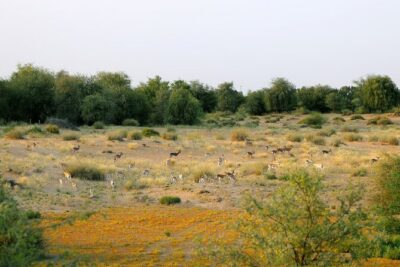
Dubai Evening Heritage Safari by Vintage G Class Al Marmoom Oasis
Read our review →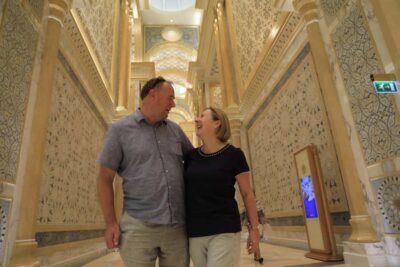
Abu Dhabi Grand Mosque, Palace, and Heritage Village
Read our review →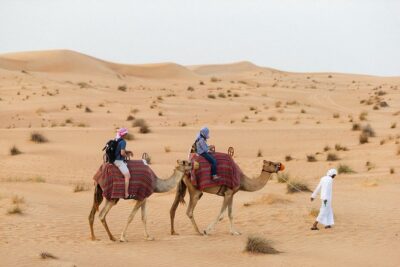
Dubai Camel Desert Safari, Traditional Meal & Heritage Activities
Read our review →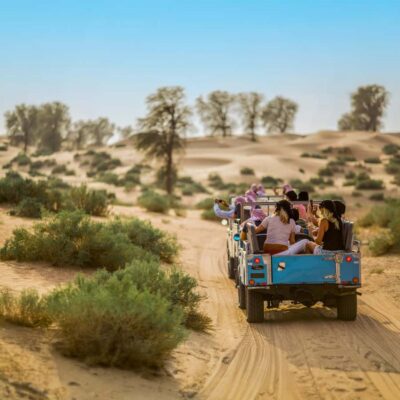
Heritage Safari in Vintage Land Rover with Dinner
Read our review →
Abu Dhabi Trip with Lunch at Al Khayma Heritage Restaurant
Read our review →
Heritage Safari, Camel Ride & Al Marmoom Oasis Dinner
Read our review →Browse the lists this tour appears in