
Review · HISTORICAL TOURS
Abu Dhabi: Inside Heritage Village Walking Tour
A quick walk through older Abu Dhabi can teach you more than a full day in malls. At the Emirates Heritage Village you get a guided loop past Bedouin tents, mud-brick buildings, and live craft work, all with skyline photo spots by the Corniche.
What I like most is the on-the-ground feel, you can stand close to the tools and ask questions as artisans work. I also really appreciate how the tour can be guided by different experts, including names like Zain and Shamnad from past groups, which points to consistent local storytelling. One thing to consider is that parts of the village can be under redevelopment, so on some visits not every area may be open, and you should confirm timing, especially on Fridays.
In This Review
- Key highlights at a glance
- Heritage Village on foot: why this short tour feels satisfying
- Getting there and what to wear for the Heritage Village
- Bedouin camp stops: tents, fire pit, and desert-life context
- Mud-brick houses and an old mosque: what the architecture teaches
- The traditional souk and craft demos: pottery, weaving, metalwork
- The on-site museum: pearl diving tools and rare artifacts
- Corniche skyline views: the photo stops you should not skip
- Price and value: about $13 for a guided heritage walk
- Timing and redevelopment: what can change during your visit
- Who should book this tour, and who might skip it
- Should you book the Abu Dhabi Heritage Village walking tour?
- FAQ
- Where is the meeting point for the tour?
- How long is the Abu Dhabi Heritage Village walking tour?
- Is the tour guided in English?
- What’s included in the ticket price?
- What can I expect to see during the walk?
- Is there a museum included in this experience?
- Are meals included?
- How much does the tour cost?
- What is the cancellation policy?
Key highlights at a glance
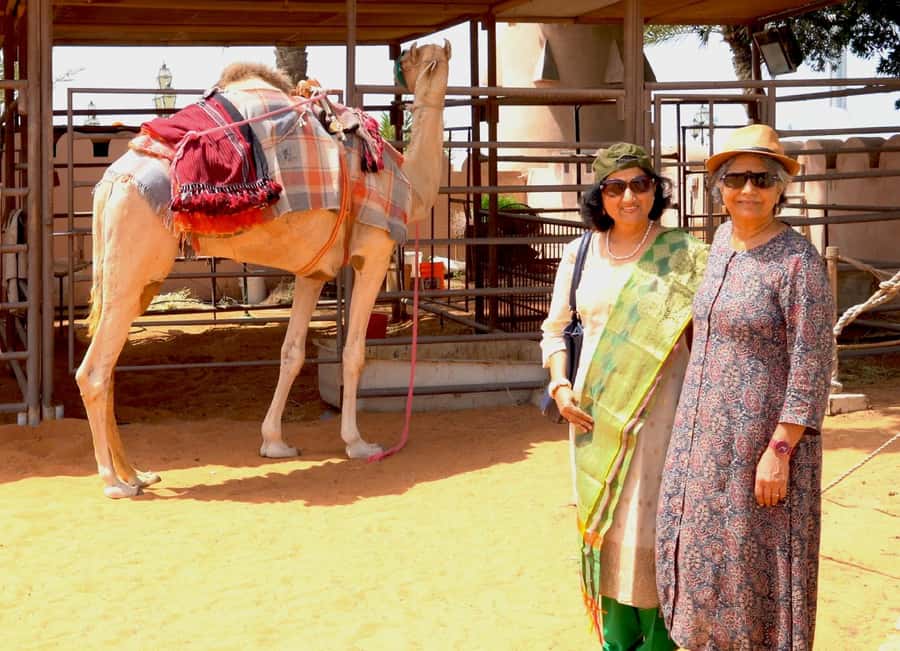
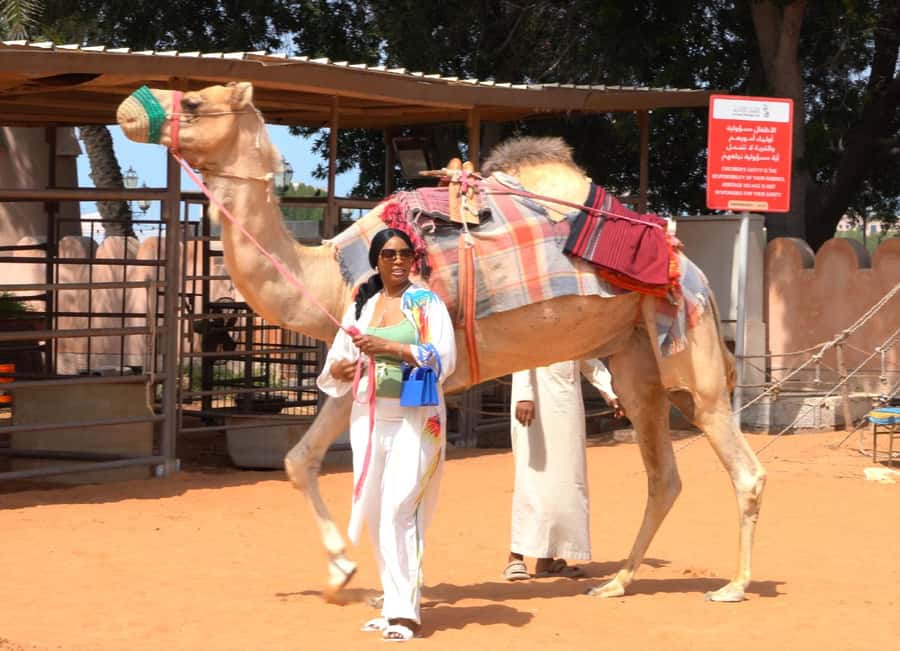
- Bedouin camp details, including tents, a fire pit, and a desert-life feel
- Live Emirati craft demos you can watch in real time, pottery, weaving, and metalwork
- Ancient architecture and replicas like mud-brick houses and an old mosque
- On-site museum entry with pearl diving tools, plus historical photos and artifacts
- Corniche skyline views, easy to frame for memorable pictures
- Guided by local experts in English, with time for questions and interaction
Heritage Village on foot: why this short tour feels satisfying
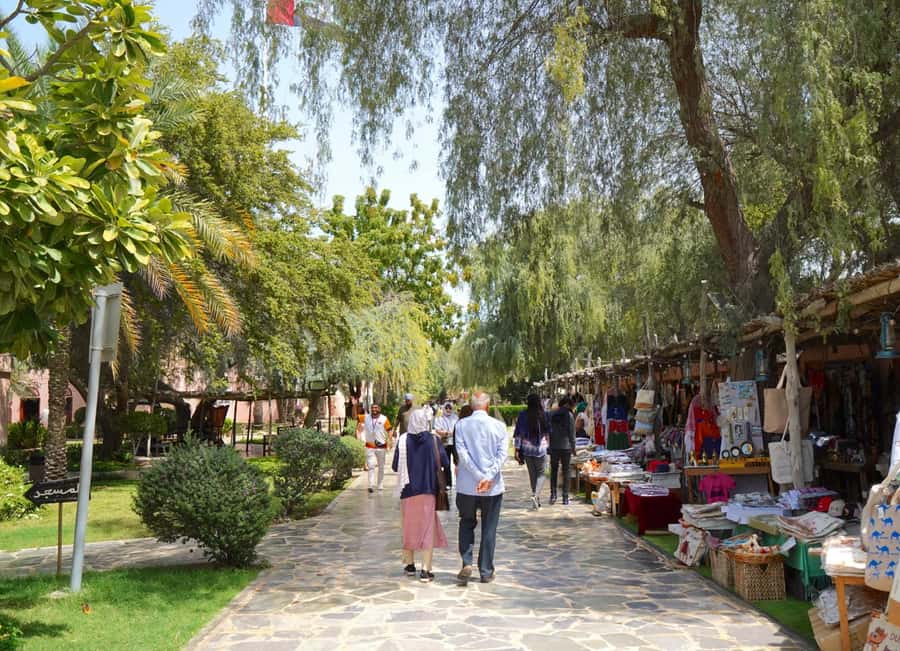
This is the kind of Abu Dhabi experience that makes the city’s story easier to hold in your head. The Heritage Village is an open-air setting where you can see how people lived, worked, and prayed, then connect those scenes to what you see outside the gates, the modern skyline along the Corniche.
I like that the pacing is quick. You are not forced to spend hours hunting for information. Instead, you follow a guide through the main areas, and you get live craft demos that give you something visual to remember long after the photos are done.
One practical note: the tour is listed as 30 minutes in the activity summary, but the guided portion is shown as 45 minutes. In real life, I’d treat this as a short, focused walk where you will likely spend closer to three quarters of an hour once the guide is leading you through the exhibits.
A few more Abu Dhabi outings to compare
- Abu Dhabi Sightseeing Tour: Sheikh Zayed Mosque, Heritage Village & Dates Market
★ 4.5 · 226 reviews - From Abu Dhabi: Grand Mosque, Royal Palace& Heritage Village
★ 4.6 · 197 reviews - Private Abu Dhabi City Tour : Sheikh Zayed Mosque & Heritage Village
★ 5.0 · 10 reviews
Getting there and what to wear for the Heritage Village
You meet your guide in front of the Heritage Village main entrance waiting area. If you are using a rideshare, I’d plan to arrive a few minutes early so you are not stuck trying to match faces on a busy day.
Dress matters here. The site asks for modest attire. That means covering shoulders and knees in a way that feels respectful in an outdoor cultural space. Even if it is hot, choosing breathable fabric that still follows the guideline will keep you comfortable and out of trouble.
Because this is a walking tour, wear closed shoes with grip. The ground can be uneven in outdoor heritage settings, and you want to move calmly through narrow paths without worrying about slipping or sore feet.
Bedouin camp stops: tents, fire pit, and desert-life context
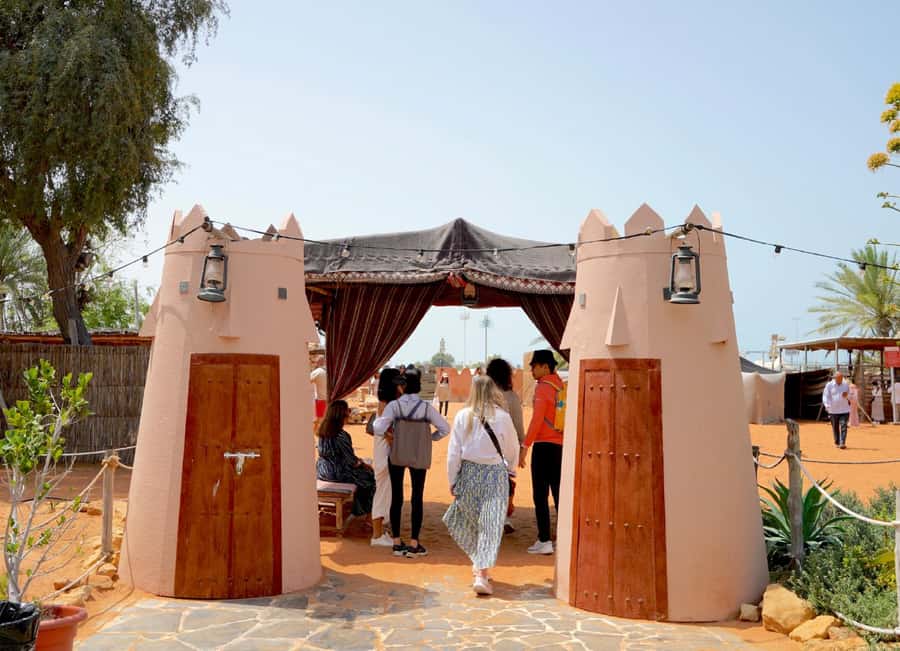
The tour’s first big atmosphere shift is the Bedouin camp. You walk through a traditional setup with tents and a fire pit, and the guide explains daily-life elements in plain language. You are not just looking at props, you are being given context for why these spaces were built the way they were.
Here’s what you should watch for: pay attention to how the camp is laid out and how the guide connects everyday routines to the desert environment. Even if you have seen photos of Bedouin life, being on-site helps you understand scale and layout, like where people would gather, where tools might be kept, and how the camp functions as a home base.
You also get a sense of why heritage villages exist at all. They are not trying to recreate a whole desert landscape. They are trying to translate key ideas, living patterns, and survival skills into a space you can actually visit and learn from.
Mud-brick houses and an old mosque: what the architecture teaches
Next you shift from camp life to built heritage. You explore replicas of mud-brick houses and an old mosque. This section matters because it shows the UAE’s past not as one single story, but as everyday living shaped by materials, climate, and community needs.
When you’re standing in or near mud-brick replica structures, notice how the shapes, textures, and openings affect the feel of the space. It is a quick way to connect architecture to function. Even if you are not an architecture person, your brain starts asking the right questions, like how people sheltered themselves from heat and how neighborhoods organized community life.
For the mosque stop, the value is the atmosphere plus the guide’s framing. You get a better sense of how religion and daily routines connect in the region’s cultural traditions. You do not need to memorize dates here. You just need to let the guide explain what you are seeing and why it mattered.
Another kind of day out in the Emirates:
- From Dubai: Abu Dhabi Sheikh Zayed Mosque Guided Tour
★ 4.9 · 9,962 reviews - From Abu Dhabi: Grand Mosque, Royal Palace, and Etihad Tower
★ 4.9 · 6,112 reviews - Abu Dhabi: Desert Safari with BBQ, Camel Ride & Sandboarding
★ 4.9 · 4,762 reviews - Abu Dhabi: Morning Desert Tour, Camel Ride & Sandboarding
★ 4.9 · 3,135 reviews
The traditional souk and craft demos: pottery, weaving, metalwork
One of the most praised parts is the live craft work. You walk through a traditional souk and watch artisans demonstrate skills like pottery, weaving, and metalwork. This is hands-on learning without the pressure of doing it yourself.
This section is where you can slow down and get specific. Ask questions about materials and process. For example, if you see pottery being formed, ask what changes the final look, or what tools are used at each stage. If you see weaving, ask about the basics, what the patterns mean or how long a piece might take. Even simple questions can turn a passive look into real understanding.
I also like the etiquette angle. When you watch an artisan work, you see the difference between a staged performance and a working skill. You can feel the pace of craft, where the maker expects you to observe respectfully and learn at the right speed.
The on-site museum: pearl diving tools and rare artifacts
The tour includes entry to the on-site museum, and this is a smart add-on. Outside, you get scenes that feel lived-in. Inside, you get objects that anchor those scenes to real history.
You’ll see items such as pearl diving tools, along with historical photographs of Abu Dhabi and other artifacts. Even if you only spend a short time here, these objects do something important: they connect craft and daily life to the economic reality that shaped communities.
If you want to make the museum time count, focus on one theme as you walk. You can pick a theme like the tools of work, or how people learned and carried knowledge forward. Then let the photos and artifacts support that theme, instead of trying to absorb everything at once.
This is also where you get a calmer break from the outdoor heat and sun glare. It is a practical rhythm, walk outside for atmosphere, then step in for object-based learning.
Corniche skyline views: the photo stops you should not skip
The tour includes scenic views across the Corniche, giving you chances to photograph the Abu Dhabi skyline. This part is not just about taking pictures. It helps you compare time scales. You see old-style heritage structures on one side, then the modern city skyline in the same frame.
For photos, timing matters. If you are going midday, expect strong light and high contrast. If you can, aim for softer lighting when possible, so buildings do not blow out and people do not squint.
Keep your camera ready when you move. The best viewpoints are usually at the transitions, where the walk opens up and you can see the skyline and heritage spaces together. The guide will often point out where to stand for a clean shot.
Price and value: about $13 for a guided heritage walk
At $13 per person, this is easy to justify, especially if you care about culture and you want something short. In a city where a lot of paid attractions are long and expensive, a half-day you actually use matters.
You are paying for three main things:
- A guided narrative from an English-speaking local expert
- Live craft demonstrations you can watch up close
- Museum entry with artifacts and photos
Even if the tour feels brief, you get enough variety in settings, camp, houses, mosque, souk, museum, and a skyline viewpoint. That mix is what keeps it from feeling like a single-street photo stop.
It also has a solid reputation with an average rating of 4.2 out of 5 from 8 reviews. That does not guarantee your experience will be identical, but it suggests the format works for many people.
Timing and redevelopment: what can change during your visit
Here’s the honest part. One issue that can affect your day is that the Heritage Village can be under redevelopment, meaning not every area may be open. Another issue is scheduling confusion around opening times on certain days, with one report stating the village opened later on a Friday than a listed start time.
So your best move is simple: check the start time you book and double-check the general opening hours the same day. If you show up early, keep your expectations flexible. If you arrive late, you might still be able to catch the guide, but you should confirm with the staff at the site entrance.
Also, don’t let a partially closed area spoil your mental plan. If one area is shut, focus on what is open, especially the craft demos and museum section, which are usually the heart of the experience.
Who should book this tour, and who might skip it
You’ll likely enjoy this tour if you:
- Want a short, guided cultural walk with Bedouin and Emirati heritage themes
- Like watching crafts happen live, and you enjoy asking questions
- Prefer calm, structured learning over trying to self-navigate everything
You might skip it if you:
- Need a full day of deep, museum-only study
- Are very sensitive to schedule changes due to site redevelopment
- Expect every single replica building and outdoor section to be open at all times
For families, this can work well because the walking time is short and the craft demos break up the experience. For solo travelers, it is also a nice option since the guide helps you connect the dots.
For culture-focused couples, the Corniche skyline views add a romantic, photo-friendly finish.
Should you book the Abu Dhabi Heritage Village walking tour?
I think this is worth booking if you want a quick and respectful way to understand Emirati culture in an easy-to-do time block. The value is strong at about $13, and the format gives you multiple kinds of learning, outdoor life scenes, live craft demonstrations, and an on-site museum with tangible artifacts.
My final advice is to book it with realistic expectations about what is open that day. If you arrive and parts of the village are closed for redevelopment, you will still likely get the core experience, the crafts, the museum, and the guided cultural explanation. If you want the smoothest visit, wear modest clothing, bring comfortable shoes, and confirm timing the day of, especially if you are traveling on a Friday.
If that sounds like your style of travel, go for it.
FAQ
Where is the meeting point for the tour?
You meet your guide in front of the Heritage Village main entrance waiting area.
How long is the Abu Dhabi Heritage Village walking tour?
It is listed as 30 minutes, and the guided tour portion is shown as 45 minutes.
Is the tour guided in English?
Yes, the live tour guide speaks English.
What’s included in the ticket price?
It includes entry to the Heritage Village and the on-site museum, plus live traditional craft demonstrations and cultural insights.
What can I expect to see during the walk?
You can expect a Bedouin camp with tents and a fire pit, replicas like mud-brick houses and an old mosque, and a traditional souk with artisan craft demos.
Is there a museum included in this experience?
Yes. The on-site museum entry is included, with items such as pearl diving tools and historical photographs.
Are meals included?
No, meals are not included.
How much does the tour cost?
The price is listed as $13 per person.
What is the cancellation policy?
Free cancellation is available up to 24 hours in advance for a full refund, and there is a reserve now and pay later option.
New around Abu Dhabi
- Skip the Line: Al Ain Zoo & Entry Ticket to Al Ain Wildlife Park & Resort★ 4.5 · 4 reviews
- Al Ain Desert Safari with Buffet Dinner★ 5.0 · 44 reviews
- Yas Waterworld at Yas Island Abu Dhabi★ 4.5 · 10 reviews
- 1 hour Quad Biking Experience with pick and drop★ 5.0 · 21 reviews
- Private Full Day Al Ain City Tour★ 5.0 · 5 reviews
- Radical SST Passenger Ride★ 4.0 · 13 reviews
- Yas Water World Abu Dhabi Ticket★ 5.0 · 19 reviews
- Yas Kartzone★ 4.5 · 36 reviews
Historical Tours, compared.

Dubai Evening Heritage Safari by Vintage G Class Al Marmoom Oasis
Read our review →
Abu Dhabi Grand Mosque, Palace, and Heritage Village
Read our review →
Dubai Camel Desert Safari, Traditional Meal & Heritage Activities
Read our review →
Heritage Safari in Vintage Land Rover with Dinner
Read our review →

Abu Dhabi Trip with Lunch at Al Khayma Heritage Restaurant
Read our review →

Heritage Safari, Camel Ride & Al Marmoom Oasis Dinner
Read our review →Browse the lists this tour appears in